Part 5 of the DevOps Dirty Dozen Series: Non est instrumentum quod sufficit — the tool alone is not enough.
Insight: Stresses that tools without collaboration and culture are ineffective.
DevOps is awash in tooling. CI/CD pipelines, container orchestrators, observability stacks, incident management platforms, infrastructure-as-code engines, security scanners, feature flag systems — the list is nearly infinite. And yet, organizations that invest heavily in the toolchain often find themselves wondering why their DevOps transformation has not delivered the promised results.
The culprit is not the tools themselves. It is the belief that tools alone are enough.
In this fifth article of the DevOps Dirty Dozen, we examine over-reliance on tools — what it looks like, why it is seductive, and how teams can rebalance their approach to treat tools as enablers rather than solutions.
Originally published on LinkedIn.
Tools amplify culture. They do not create it.
The Anatomy Of Tool Over-Reliance
Over-reliance on tools is easy to spot once you know what to look for. It manifests in behaviors that prioritize tool adoption over the deeper work of building culture, refining process, and fostering collaboration:
-
Tool-Driven Transformation: A leader declares, “We are adopting DevOps,” and the first action is purchasing a tool. The assumption is that the tool will create the change, rather than the other way around.
-
Automation Without Understanding: Teams rush to automate workflows using a new tool before understanding whether the process is sound. The tool becomes a bandage over a wound that needs surgery.
-
Tool Hopping: When outcomes do not improve, the response is not to examine culture or process. It is to replace the tool. “If only we used X instead of Y, everything would work.”
-
Process by Configuration: Teams assume that configuring a tool to enforce a workflow is equivalent to building a healthy process. Configuration replaces conversation.
-
Metrics Without Meaning: Tools generate dashboards and reports, but nobody acts on them. The data exists because the tool produces it, not because the team has a practice of using it.
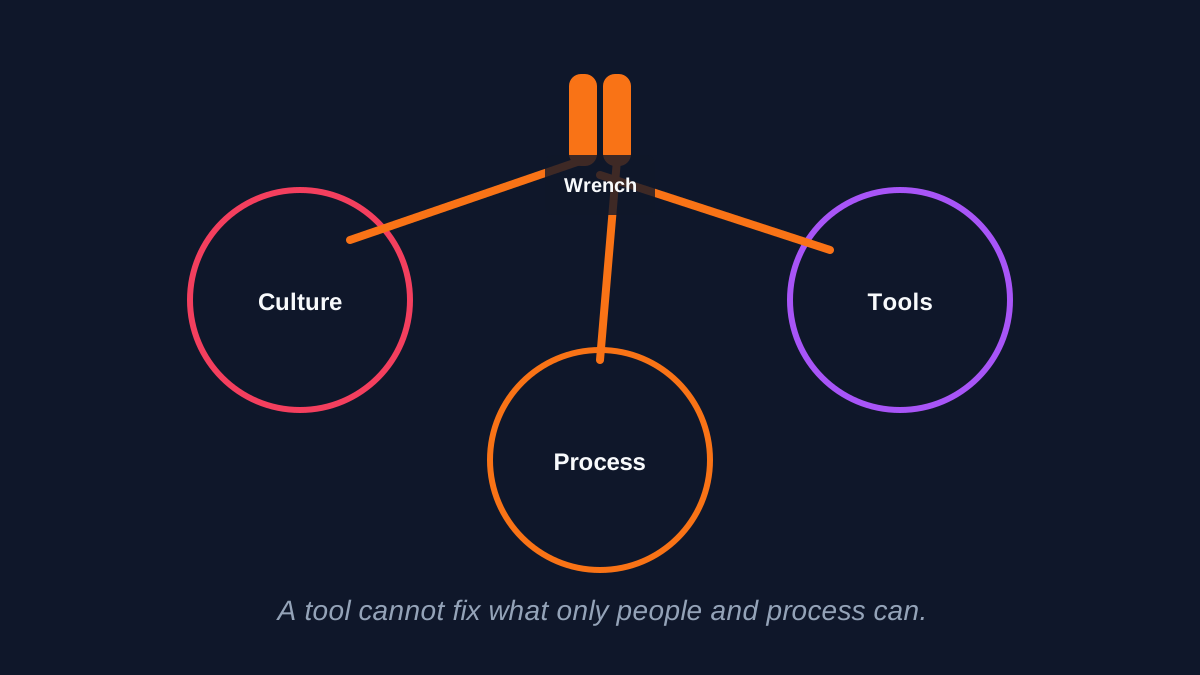
A tool cannot fix what only people and process can.
The Cost Of Over-Reliance On Tools
The cost of treating tools as solutions rather than enablers is subtle but significant:
-
Cultural Debt: When tools are adopted without addressing underlying trust, collaboration, and safety issues, the cultural problems persist. The tool just masks them.
-
False Confidence: A sophisticated monitoring stack can create the illusion of observability. The team has dashboards but still cannot answer basic questions about system behavior during an incident.
-
Wasted Investment: Tools that are not embedded in a healthy culture and clear process will be underutilized, misconfigured, or abandoned. The licensing cost is the smallest part of the loss.
-
Process Blindness: When a tool automates a bad process, the process becomes invisible. Teams stop questioning whether the workflow makes sense because “the tool handles it.”
-
Collaboration Theater: Collaboration tools create channels, boards, and threads that simulate communication without producing shared understanding. The artifact of collaboration replaces the act.
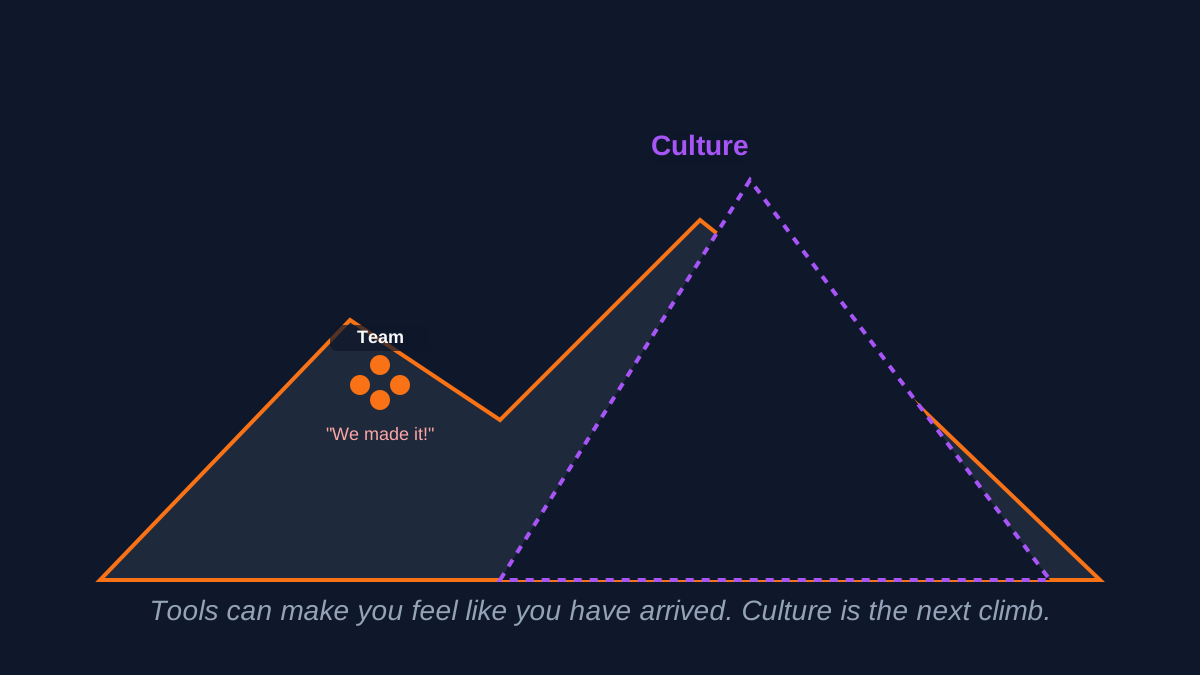
Tools can make you feel like you have arrived. Culture is the next climb.
A Real-World Example: The Incident Management Platform That Changed Nothing
Consider a team that implemented a well-regarded incident management platform. It brought on-call scheduling, automated alert routing, status pages, and postmortem templates. The tooling was best in class.
But the organization still had a blame culture. Postmortems were exercises in identifying who made the error. The on-call rotation was a source of anxiety, not ownership. Alerts were tuned to avoid waking anyone rather than signaling real problems.
The platform itself was excellent. It did everything it was designed to do. The team had simply expected the tool to solve problems that were cultural and procedural, not technical. A year later, the platform was in use, but incident response had not improved. The tool was not the missing piece — psychological safety, clear escalation policies, and a learning-oriented postmortem practice were.
Why Over-Reliance On Tools Occurs
Over-reliance on tools is not a sign of laziness. It is a pattern driven by systemic incentives:
-
Tools Are Tangible: Buying a tool is a visible, measurable action. It generates announcements, blog posts, and resume lines. Improving culture is invisible and slow.
-
Tool Procurement Is Easier Than Change Management: It is easier to get budget approval for a tool than to shift organizational behavior. Tools fit into existing procurement processes. Culture change does not.
-
Vendor Narratives Are Compelling: Every tool vendor promises transformation. The marketing speaks directly to the pain, and the pitch is tailored to make the tool seem like the missing link.
-
Fear Of Obsolescence: Teams worry that not adopting the latest tool will leave them behind. The fear of being perceived as outdated drives adoption without reflection.
-
Tool Fatigue Masks Deeper Issues: When teams are overwhelmed by tool choices, they default to the belief that they simply have not found the right tool yet. The search itself becomes a distraction from examining culture and process.
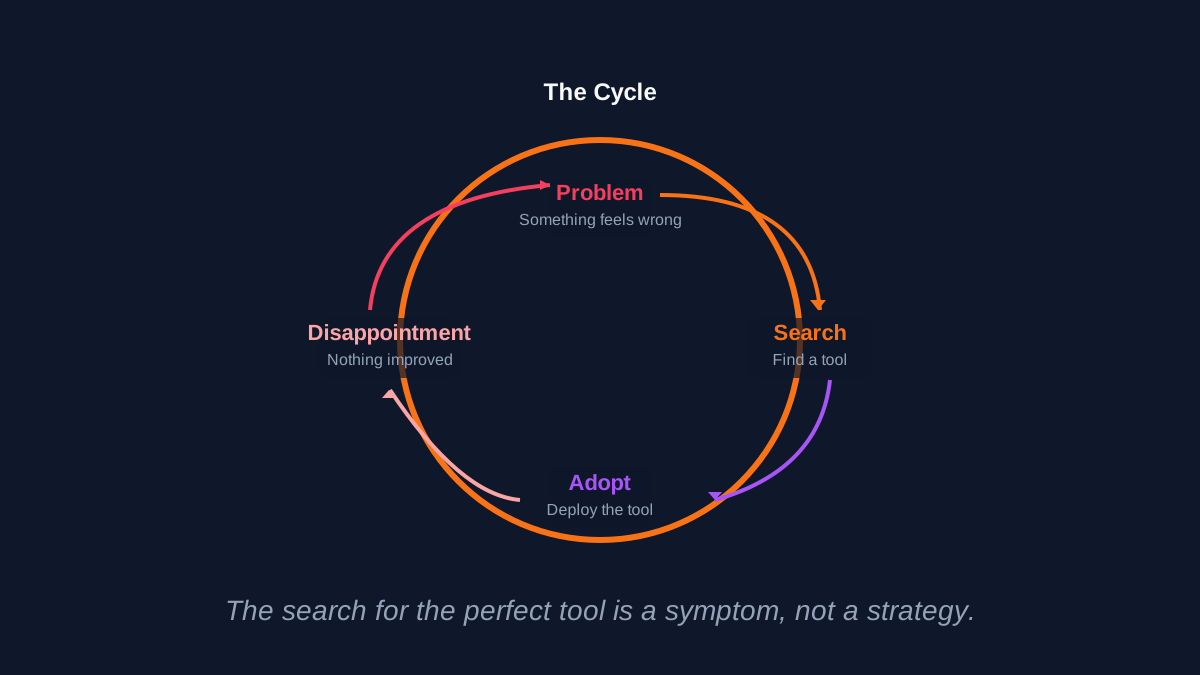
The search for the perfect tool is a symptom, not a strategy.
Restoring Balance: Tools As Enablers, Not Solutions
The goal is not to abandon tools. It is to restore them to their proper role as enablers of good culture and process.
-
Start With Culture And Process: Before selecting a tool, define the behavior you want to enable. What does good collaboration look like? What does a healthy incident response feel like? The tool should reinforce behaviors that already exist or are being built.
-
Adopt Tools Slowly, Retire Them Deliberately: Every tool adoption should include a hypothesis. What problem is this solving? How will we know if it is working? And when will we revisit that decision? Adopting a tool is not a terminal decision.
-
Measure What Matters, Not What Is Easy: The tool can generate data. The team must decide what is meaningful. Lead time, deployment frequency, mean time to recovery, and change failure rate matter more than dashboard count or alert volume.
-
Invest In Practice, Not Just Platform: Training, runbooks, incident drills, and postmortem habits matter more than the tooling that supports them. A team with strong practices and mediocre tools will outperform a team with weak practices and excellent tools.
-
Treat Tools As Accountable Infrastructure: Every tool should have an owner who is responsible not just for uptime, but for whether the tool is actually improving outcomes. If it is not, the tool should be removed.
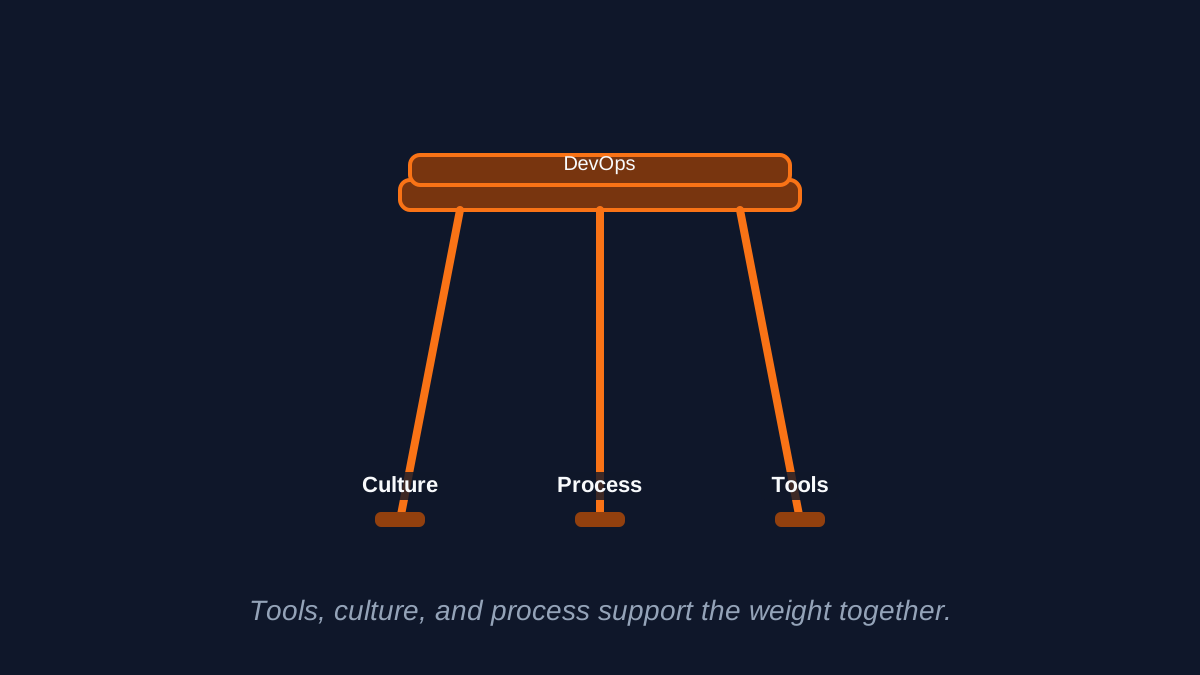
Tools, culture, and process support the weight together. Remove one leg, and the whole thing tips.
Applying The Scientific Method
Over-reliance on tools can be countered by treating tool adoption as a hypothesis to be tested:
-
Ask Questions: What specific behavior are we trying to change? Is this a tool problem, a process problem, or a culture problem?
-
Gather Data: Before adopting a tool, measure the current state. How long do incidents take to resolve? How often do deployments fail? What is the team’s sense of psychological safety?
-
Form Hypotheses: “If we adopt X tool, we expect Y outcome within Z time.” Be specific. The hypothesis makes the tool accountable.
-
Test And Observe: Implement the tool with a clear pilot scope. Measure the same metrics. Did the outcome improve? If not, was the problem the tool, or the assumption that a tool could fix it?
-
Iterate: Based on evidence, decide whether to expand, adjust, or sunset the tool. The question is never “Is this tool good?” It is “Is this tool making things better?”
Carl Sagan’s Baloney Detection Kit
Before adopting any tool, apply critical thinking to evaluate the claims:
-
Question Assumptions: Is the tool being adopted because it solves a real problem, or because it is the current industry trend? Is the problem technical or cultural?
-
Seek Evidence: What data supports the claim that this tool will improve outcomes? Are there case studies from similar organizations? Or is the evidence anecdotal?
-
Test Before Scaling: Does the tool work in your context? A proof of concept in a controlled environment can reveal mismatches before widespread adoption.
-
Consider Alternative Explanations: Could the same outcome be achieved with process changes, training, or better communication? Is the tool solving a symptom rather than a root cause?
-
Avoid Bandwagon Fallacy: Adoption by peers and industry leaders does not mean the tool is right for your team. Every organization has unique constraints.

The best tool decision is the one you can articulate without buzzwords.
Moving Forward Together
Tools are an essential part of any DevOps practice. They automate, monitor, orchestrate, and inform. But they are not a substitute for the harder work of building a collaborative culture, designing clear processes, and fostering psychological safety.
The teams that succeed with DevOps are not the ones with the most sophisticated toolchains. They are the ones where the tools fade into the background, supporting the work without dominating the conversation. The tool is never the hero. The team is.
Has your organization fallen into the trap of relying on tools to solve cultural or process problems? What helped you restore balance? Share your experiences as we continue through the DevOps Dirty Dozen.
References
- The DevOps Handbook by Gene Kim, Patrick Debois, John Willis, and Jez Humble
- Accelerate: The Science of Lean Software and DevOps by Nicole Forsgren, Jez Humble, and Gene Kim
- DORA: Generative organizational culture
- Team Topologies by Matthew Skelton and Manuel Pais
- Conway’s Law — Melvin Conway
- HBR: Culture Eats Strategy For Breakfast
- The Three Ways: Principles Underpinning DevOps