Part 12 of the DevOps Dirty Dozen Series: Nomen est omen — the name is a sign.
Insight: Reminds us that mere labeling without substance is meaningless.
DevOps became popular because it named a real problem: development and operations were too often separated by incentives, handoffs, tools, and blame. The promise was not a new department, a new title, or a new toolchain. The promise was a better way of building and operating software together.
Then the word started to drift.
DevOps became a job title, a team name, a tool category, a transformation slide, a vendor label, and sometimes a substitute for the harder work it was supposed to represent. Organizations adopted the vocabulary without changing the system. They talked about DevOps while preserving the same silos, approvals, bottlenecks, and fear.
That is the DevOps-as-a-buzzword anti-pattern: adopting the name while avoiding the change.
A new label does not transform an old system.
The Anatomy Of DevOps In Name Only
DevOps as a buzzword is not always obvious. It often looks like progress from a distance.
-
Renamed Teams: Operations becomes DevOps, but the work remains ticket intake, environment gatekeeping, and after-hours firefighting. The name changes. The operating model does not.
-
Tool-First Transformation: The organization buys CI/CD, observability, secrets management, or platform tooling and declares DevOps achieved. Collaboration, ownership, and feedback remain unchanged.
-
Old Handoffs In New Language: Teams still throw work over the wall, but now the wall has a pipeline attached to it. Automation accelerates the handoff without improving shared responsibility.
-
Transformation Theater: Leaders present roadmaps, maturity models, and slogans, but teams do not receive time, authority, or incentives to change how work actually flows.
-
Cargo-Cult Practices: Standups, pipelines, postmortems, dashboards, and platform teams are copied from successful organizations without understanding the constraints they were designed to solve.
Transformation theater is easy to present and hard to operate.
The Cost Of The Buzzword
The damage is not merely semantic. When DevOps becomes branding instead of practice, it creates real organizational risk.
-
False Progress: Leaders believe transformation is underway because language and tooling changed. The deeper constraints remain hidden.
-
Cynicism Increases: Engineers can tell when vocabulary is disconnected from reality. When teams hear DevOps used to describe unchanged behavior, trust erodes.
-
Tooling Gets Blamed For Cultural Failure: A CI/CD platform cannot fix approval bottlenecks. An observability tool cannot create psychological safety. When tools fail to transform the system alone, the tool is blamed instead of the operating model.
-
Old Incentives Persist: If teams are still rewarded for local optimization, avoiding risk, protecting turf, or closing tickets instead of improving flow, DevOps language will not change behavior.
-
Real Improvement Gets Harder: Once the organization has already “done DevOps,” it becomes harder to argue for the work DevOps actually requires.
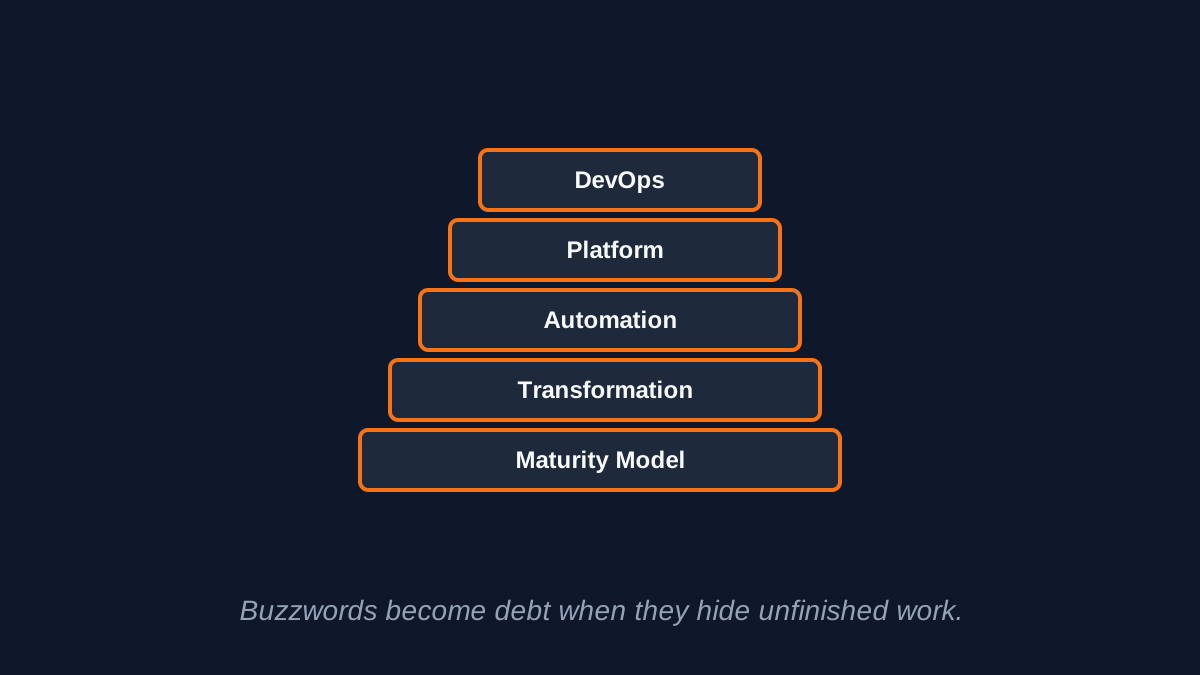
Buzzwords become debt when they hide the work still unfinished.
A Real-World Example: The DevOps Team That Became A Queue
I have seen organizations create a DevOps team to accelerate delivery, only to turn that team into another centralized queue. Developers still opened tickets for environments, pipelines, secrets, deployments, and troubleshooting. Operations still owned production pain. Security still arrived late. The new DevOps team sat in the middle trying to satisfy everyone.
At first, it looked like progress. There was a team with the right name. There were pipelines. There were dashboards. There was a backlog full of platform work.
But the delivery system had not changed. The DevOps team became the new bottleneck because the organization had not distributed ownership or reduced handoffs. Developers were still not empowered to operate their services. Operations knowledge was still centralized. Incidents still escalated to specialists instead of service-owning teams.
The fix was not to rename the team again. The fix was to change the interaction model: platform capabilities instead of ticket fulfillment, paved roads instead of bespoke requests, service ownership instead of handoff, and shared operational standards instead of one team absorbing everyone else’s complexity.
The word DevOps was not wrong. The implementation was incomplete.
What Real DevOps Requires
DevOps is not a department or a product SKU. It is a set of operating principles that must be visible in daily work.
-
Shared Ownership: Teams that build services need meaningful responsibility for operating them. Operations expertise should be embedded, shared, and amplified — not isolated.
-
Fast Feedback: Monitoring, testing, user feedback, incident reviews, and deployment signals must flow back into engineering decisions.
-
Reliable Automation: Automation should reduce toil, enforce standards, and make safe behavior easier. It should not automate confusion or hide ownership gaps.
-
Psychological Safety: Teams need to surface risk, failure, and uncertainty without blame. Without safety, feedback loops become reporting theater.
-
Small, Reversible Change: Delivery improves when changes are understandable, observable, and recoverable.
-
Continuous Improvement: DevOps is never complete. The system must be reviewed, adapted, and improved as constraints change.
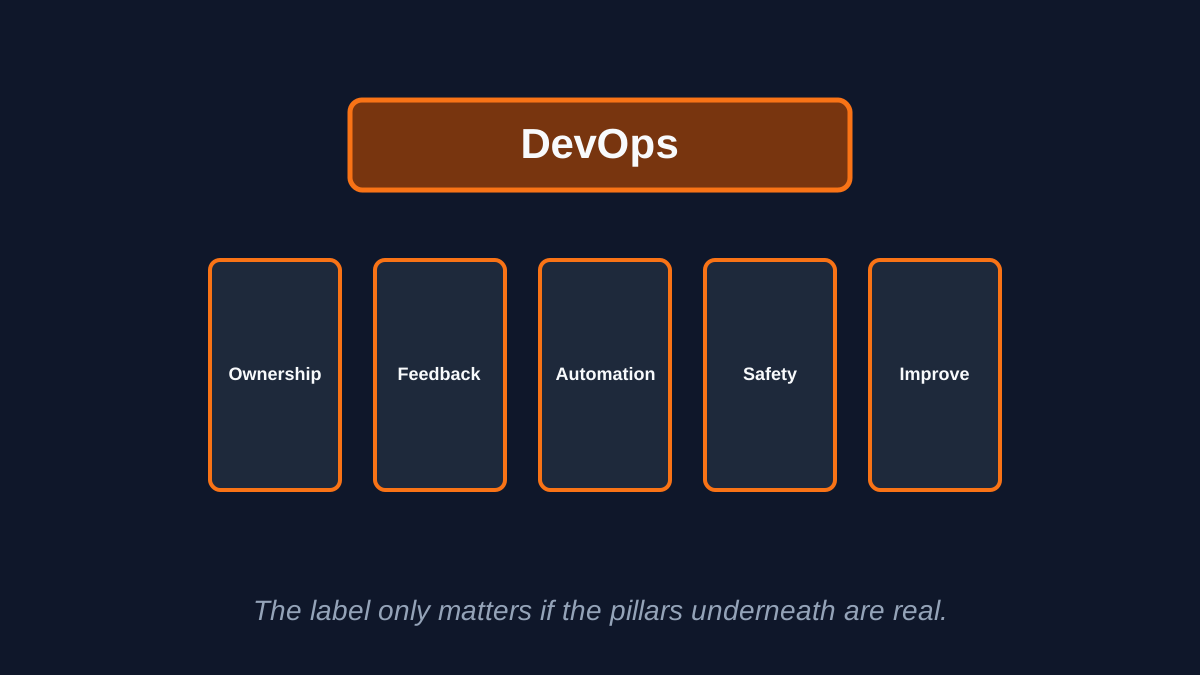
The label only matters if the pillars underneath are real.
How To Tell If DevOps Is Real
Ask practical questions. Avoid slogans.
| Question | Healthy Signal | Warning Signal |
|---|---|---|
| Who owns production behavior? | Service teams share operational responsibility. | Production is owned by a separate group after handoff. |
| How does feedback reach engineering? | Incidents, metrics, and user reports change priorities. | Feedback is observed but rarely changes work. |
| What happens after failure? | Teams improve the system without blame. | People are blamed or action items disappear. |
| How are platforms consumed? | Paved roads enable teams to self-serve safely. | Every request becomes a ticket to a central team. |
| How are tools evaluated? | Tools are tied to outcomes and ownership. | Tools are adopted because they look like DevOps. |
| How does change happen? | Small, observable, reversible steps. | Large releases with unclear rollback. |
The answers matter more than the vocabulary.
Why The Buzzword Persists
DevOps-as-a-buzzword persists because labels are easier than systems change.
-
Labels Are Visible: A new team name, tool purchase, or transformation program is easy to announce. Changing incentives and ownership is harder to show.
-
Vendors Sell The Word: The market attaches DevOps to products because buyers recognize it. That does not mean the product creates the practice.
-
Leaders Want A Finish Line: “We adopted DevOps” is more comfortable than “we are continuously improving how work flows through a complex sociotechnical system.”
-
Teams Need Language For Pain: Sometimes teams use the word DevOps because they know the old model hurts, even if they do not yet know how to change it.
-
Partial Improvements Are Mistaken For Transformation: A new pipeline or dashboard can be useful. It is just not the whole system.
A slogan can point at a problem. It cannot solve the system.
Applying The Scientific Method
The cure for buzzword DevOps is evidence.
-
Ask: What specific constraint are we trying to improve — lead time, reliability, toil, handoffs, recovery, quality, security, or ownership?
-
Hypothesize: “If we introduce self-service deployment with guardrails, lead time will decrease without increasing change failure rate.”
-
Test: Apply the change to one service or team. Keep the scope small enough to learn.
-
Measure: Track outcomes, not adoption theater. Did flow improve? Did reliability hold? Did toil decrease? Did teams gain autonomy?
-
Iterate: Keep what works, revise what does not, and avoid declaring victory because the label is present.
Carl Sagan’s Baloney Detection Kit
When DevOps language appears, challenge it with grounded questions:
-
“What changed in daily work?” — If the answer is only terminology, transformation has not happened.
-
“Which handoff disappeared?” — DevOps should reduce harmful handoffs, not rename them.
-
“What can teams now do safely without waiting?” — Real improvement increases safe autonomy.
-
“Which metric improved without creating a worse tradeoff?” — Look for balanced outcomes, not vanity metrics.
-
“What did we stop doing?” — If nothing was retired, the organization may have added DevOps on top of the old system.
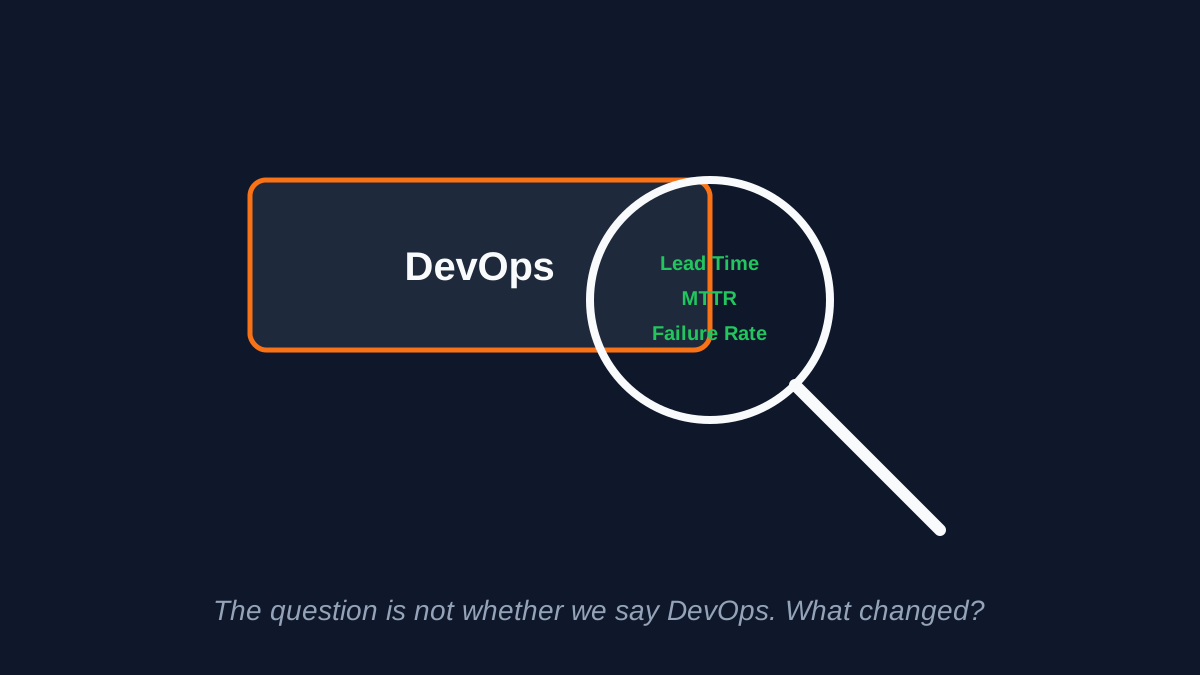
The question is not whether we say DevOps. The question is what changed.
Moving Forward Together
This final anti-pattern brings the series full circle. Every item in the DevOps Dirty Dozen can hide behind the word DevOps: silos, tool overload, automating chaos, blame, over-reliance on tools, ignored feedback, hero culture, big bang deployments, metrics misuse, resistance to change, and neglected systems.
That is why the label is not enough.
DevOps is useful only when it changes how work flows, how teams learn, how systems are operated, and how responsibility is shared. It is not a badge. It is not a maturity certificate. It is not a team name. It is a practice of continuously improving the sociotechnical system that delivers and operates software.
Nomen est omen — the name is a sign. But the sign is not the destination.
If your organization says it is doing DevOps, ask what became safer, faster, clearer, or more reliable because of it. The answer should be visible in the work, not just in the slide deck.
References
- The DevOps Handbook by Gene Kim, Patrick Debois, John Willis, and Jez Humble
- Accelerate: The Science of Lean Software and DevOps by Nicole Forsgren, Jez Humble, and Gene Kim
- The Three Ways: Principles Underpinning DevOps
- Team Topologies by Matthew Skelton and Manuel Pais
- DORA: Generative organizational culture
- Google SRE Book — Introduction