Part 8 of the DevOps Dirty Dozen Series: Gutta cavat lapidem — a drop hollows out the stone.
Insight: Advocates for small, consistent efforts over overwhelming changes.
Big bang deployments are seductive because they feel efficient. One release window. One coordination call. One massive bundle of work moved into production at once. Weeks or months of effort finally land, and the organization gets to say the project shipped.
Then something breaks.
The problem with big bang deployments is not that large changes always fail. The problem is that when they fail, they fail with too much context, too many variables, and too much pressure. The blast radius is large, the rollback is unclear, and every team on the bridge has a different theory about which part of the release caused the damage.
DevOps works best when change is small enough to understand, validate, and reverse. Big bang deployments invert that principle. They delay learning until the most expensive possible moment: production cutover.
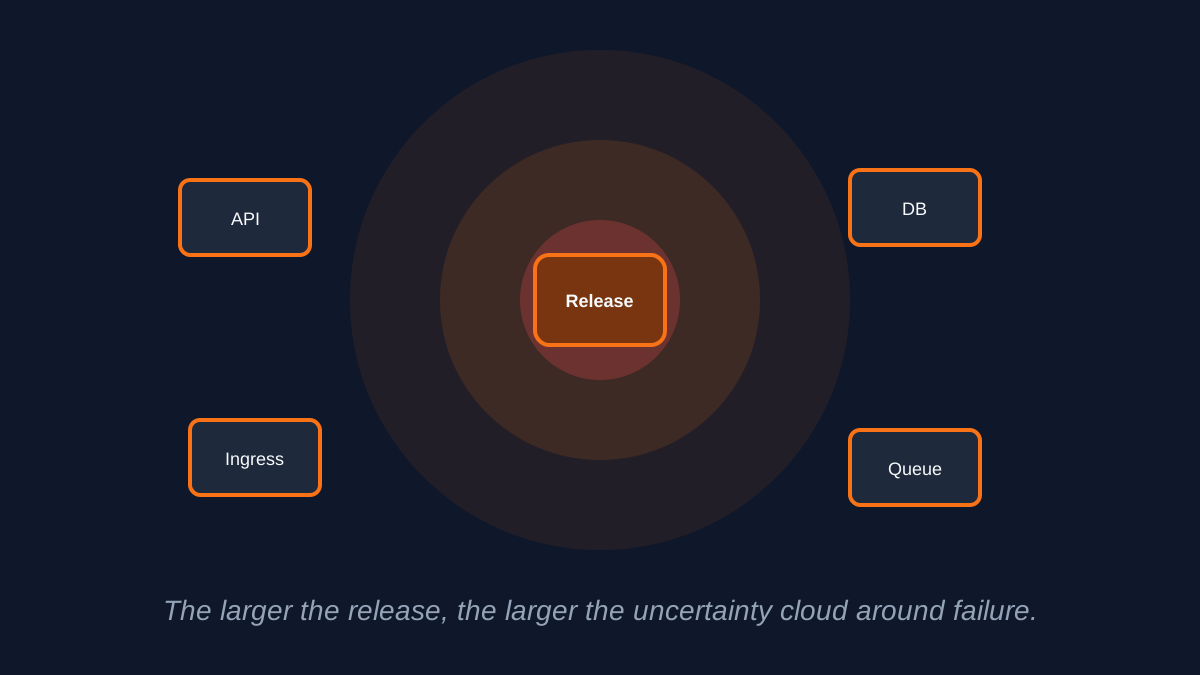
The larger the release, the larger the uncertainty cloud around failure.
The Anatomy Of Big Bang Deployments
Big bang deployments happen when many independent changes are bundled into one release event. They often appear under names that sound responsible: release train, quarterly launch, migration weekend, coordinated cutover, platform refresh.
The pattern is not defined by size alone. It is defined by coupling and irreversibility.
Common signs include:
-
Many Changes, One Window: Application changes, database migrations, infrastructure updates, configuration changes, and dependency upgrades all land together.
-
Rollback Is Theoretical: The rollback plan exists as a section in the change ticket, but nobody has rehearsed it end to end. Some parts can roll back. Others cannot.
-
Testing Happens Too Late: Integration testing occurs near the end, after all pieces are merged. Failures discovered late are treated as release blockers instead of design feedback.
-
Release Night Becomes A War Room: Dozens of people join a bridge call, each responsible for one slice of the system. Coordination becomes the control plane.
-
Success Criteria Are Vague: The release is considered successful if nothing obvious is on fire after the window closes. Latent failure, degraded user experience, and operational debt are discovered later.
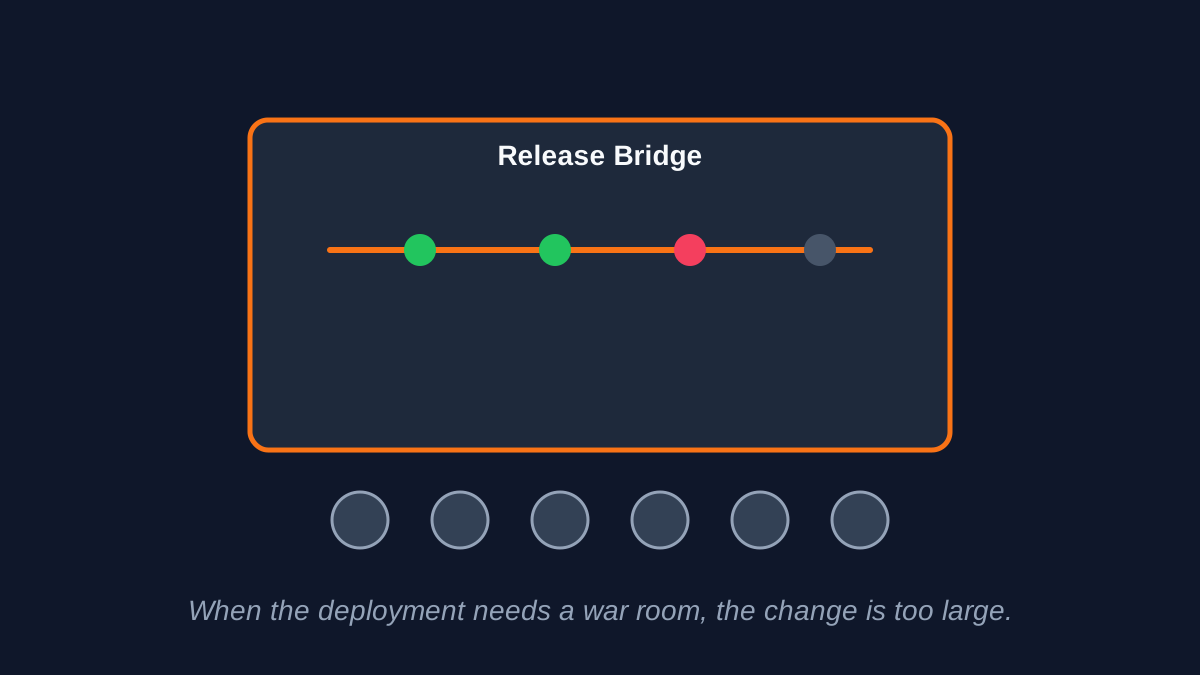
When the deployment needs a war room, the system is telling you the change is too large.
The Cost Of Big Bang Deployments
Big bang deployments concentrate risk in ways that make systems harder to operate.
-
Root Cause Analysis Becomes Guesswork: When fifty changes ship together, the first question during an incident is not “what changed?” It is “which part of everything changed?”
-
Rollback Becomes Dangerous: Rolling back a large deployment may undo unrelated fixes, conflict with database state, or leave dependent systems in incompatible versions. Teams hesitate, and hesitation extends outages.
-
Feedback Arrives Too Late: Problems that could have been caught with incremental rollout are discovered after the entire change set is live. The cost of learning increases.
-
Release Anxiety Increases: The larger the deployment, the more fear surrounds it. Teams delay releases further to avoid risk, which makes the next release even larger. The cycle feeds itself.
-
Ownership Blurs: With many teams involved in one release, accountability becomes diffuse. Everyone owns a piece, but nobody owns the system behavior created by the pieces together.
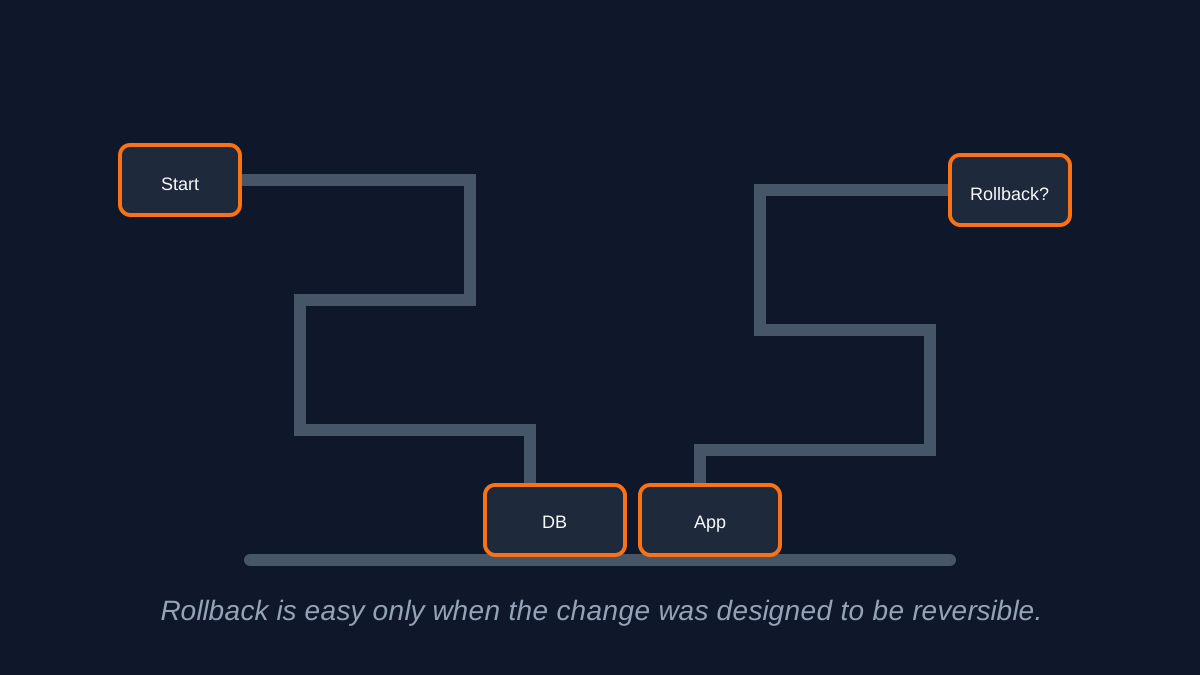
Rollback is easy only when the change was designed to be reversible.
A Real-World Example: The Migration Weekend That Became A Month
A team planned a platform migration over a long weekend. The change included a Kubernetes version upgrade, ingress controller replacement, database parameter changes, new DNS records, and application configuration updates. Each change had been tested in isolation. The combined release was scheduled for a single maintenance window.
The first few hours went well. Nodes upgraded. Pods rescheduled. DNS propagated. Then intermittent failures appeared in one customer workflow. The logs pointed at the application. The application team pointed at ingress. The ingress team pointed at DNS. The database team pointed at connection pooling. Every theory was plausible because everything had changed.
Rollback was not clean. DNS had propagated. Database settings had changed. Some workloads were already running against new assumptions. Returning to the previous state would have been another big bang deployment under worse conditions.
The maintenance window closed with the platform technically online but operationally fragile. For the next month, teams chased edge cases created by the combined change. None of the individual changes were reckless. Bundling them together made the release unrecoverable.
The lesson was blunt: integration risk is real risk. Testing pieces separately does not prove the combined release is safe.
Why Big Bang Deployments Persist
Teams usually know large releases are risky. They still happen because the organization rewards batching.
-
Change Approval Favors Fewer Events: If every release requires heavy process, teams batch work to reduce administrative overhead. The change process accidentally creates larger, riskier changes.
-
Stakeholders Want A Launch Date: Project plans often converge on a single visible date. The business gets certainty. Engineering inherits concentrated risk.
-
Architecture Couples The Release: If services, schemas, clients, and infrastructure cannot evolve independently, the organization has no choice but to deploy them together.
-
Testing Environments Are Not Trusted: When staging is unreliable or incomplete, teams defer real validation until production. Production becomes the first honest integration environment.
-
Rollback Is Not Part Of Design: Features are built to go forward, not backward. Without feature flags, compatibility windows, and migration strategy, small deployment becomes difficult.
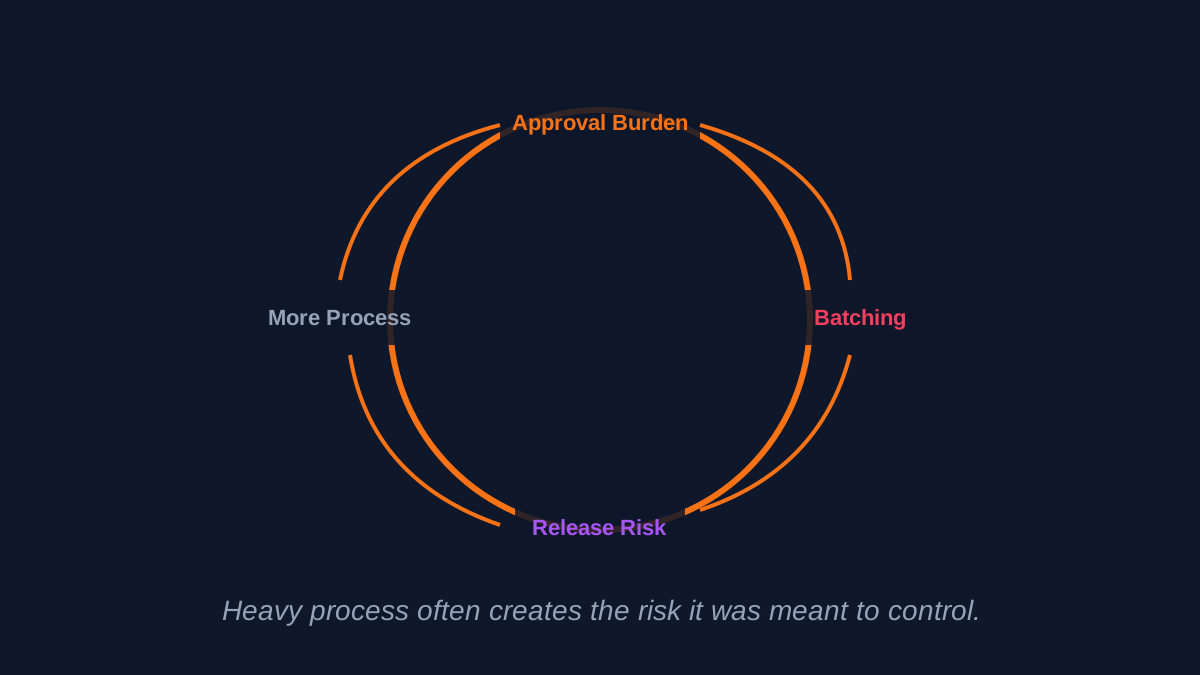
Heavy process often creates the very risk it was meant to control.
Moving From Big Bang To Incremental Delivery
Escaping big bang deployments requires designing for smaller change. It is not only a release-management decision. It is an architecture, testing, and culture decision.
-
Separate Deploy From Release: Deploy code dark, then release behavior through feature flags or configuration. This lets teams validate production deployment mechanics before exposing users to the change.
-
Use Expand-And-Contract Migrations: Database changes should support old and new application versions during a compatibility window. Add first, migrate usage, remove later.
-
Limit Change Per Release: One application change and one infrastructure change in the same window may be manageable. Ten of each is not. If a release cannot be explained clearly in a few sentences, it is probably too large.
-
Canary Before Full Rollout: Start with one node, one tenant, one region, or one small percentage of traffic. Observe before expanding.
-
Make Rollback Real: A rollback plan is only real if it has been tested. If rollback is impossible, document that explicitly and design a forward-fix path before deployment begins.
-
Reduce Change Approval Friction: If the process makes small changes expensive, people will batch. Lightweight approvals for low-risk incremental changes reduce the incentive to create big releases.
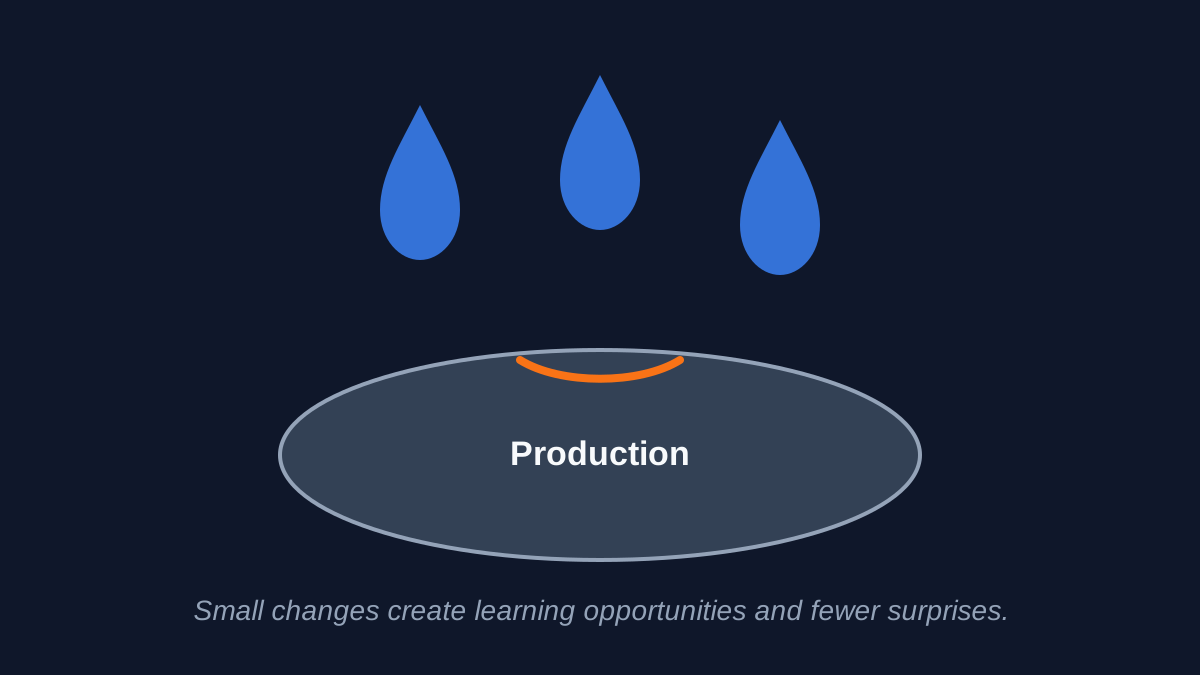
Small changes create more learning opportunities and fewer catastrophic surprises.
Applying The Scientific Method
Incremental delivery is experimentation applied to release engineering.
-
Ask: What is the smallest change that can validate the assumption?
-
Hypothesize: “If we deploy this change to one tenant first, we expect no increase in error rate or latency over thirty minutes.”
-
Test: Deploy to a narrow slice of production with clear monitoring and rollback criteria.
-
Observe: Watch technical metrics and user-facing signals. Do not rely only on deployment success.
-
Iterate: Expand, pause, roll back, or adjust based on evidence. The release plan should respond to reality, not the calendar.
Carl Sagan’s Baloney Detection Kit
Big bang deployments often survive because teams repeat comfortable assumptions. Challenge them:
-
“It is safer to do it all at once.” — Safer for coordination, or safer for production? Those are not the same.
-
“We tested everything in staging.” — Is staging production-like enough to prove the claim? Does it have the same data shape, traffic, dependencies, and failure modes?
-
“Rollback is documented.” — Has it been rehearsed? Does it include database state, DNS, queues, caches, and downstream consumers?
-
“This has to ship together.” — Is that a real technical constraint, or a planning habit? Can compatibility be introduced to decouple the pieces?
-
“We only deploy quarterly because releases are risky.” — Are releases risky because they are rare and large?
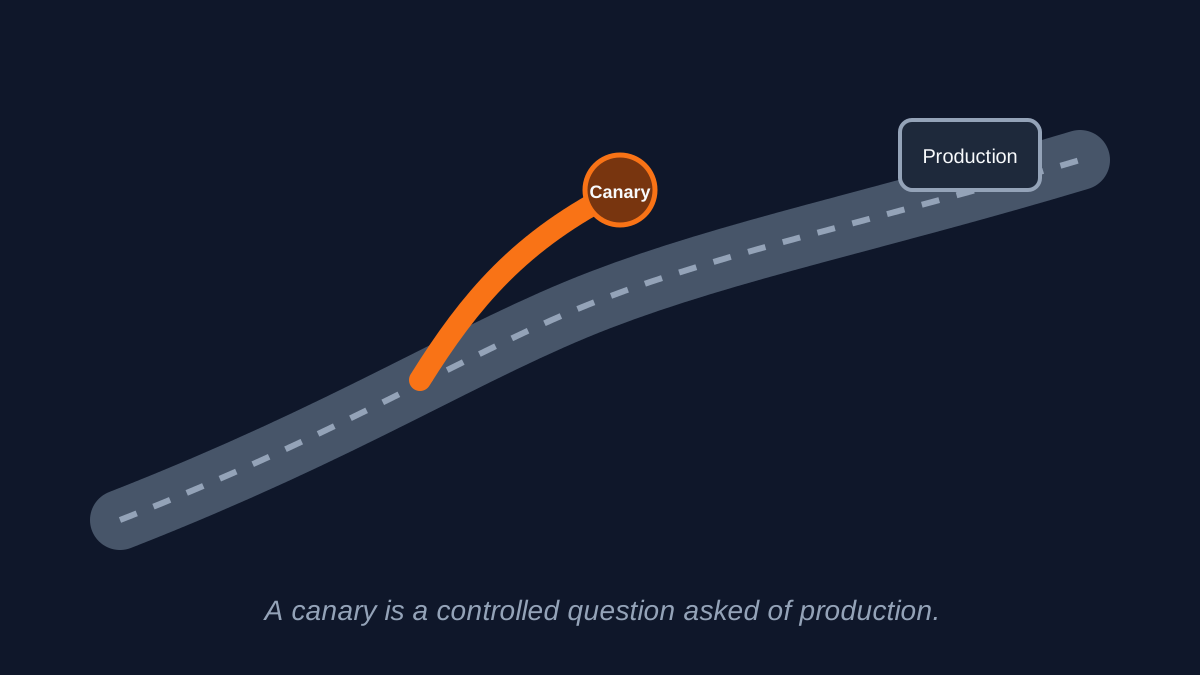
A canary is not ceremony. It is a controlled question asked of production.
Moving Forward Together
Big bang deployments are not a badge of discipline. They are often evidence that the organization has allowed change to become too hard, too coupled, or too frightening.
The goal is not reckless speed. The goal is recoverability. Smaller releases do not eliminate failure, but they make failure easier to understand and contain. They turn deployment from an event into a habit.
The proverb says a drop hollows out the stone. It does not happen through force. It happens through repetition. The same is true of reliable delivery: small changes, repeated safely, reshape systems more effectively than occasional acts of release-day heroism.
What is the largest release your team still treats as normal? What would it take to split it into ten smaller, safer changes?
References
- Continuous Delivery by Jez Humble and David Farley
- Accelerate: The Science of Lean Software and DevOps by Nicole Forsgren, Jez Humble, and Gene Kim
- The DevOps Handbook by Gene Kim, Patrick Debois, John Willis, and Jez Humble
- Martin Fowler: Feature Toggles
- Google SRE Book — Managing Critical State
- The Twelve-Factor App: Disposability